The history of Château Fleur Cardinale
A dream come true as a family
According to the archives, the estate's vineyard already existed in1819The first vintages from these plots were produced in the years1920and the property was then calledClos Bel-AirThe nameChâteau Fleur Cardinaleis assigned byMr. Jean-Louis Obissierwho bought theClos Bel-Air in 1975His daughter then owned two racehorses named Fleur and Cardinale, which gave their name to the estate.
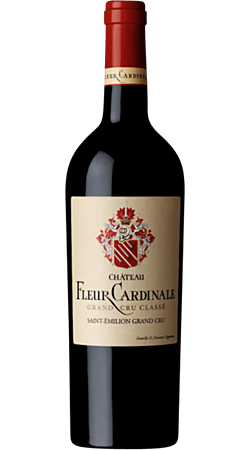
It's in2001thatDominique Decoster and his wifeFlorenceThey acquired the castle. Porcelain makers in Limoges for over 27 years, they decided to live a long-held dream they had considered impossible. They currently live in the castle with their three children.Matthieu, Ludovic, Lucie and FlorenceThey quickly suggested including the coat of arms of theDecoster familyon the wine labels of theCastleThe couple chose to keep the existing team from their arrival and also brought on board a consulting oenologist, an experienced agricultural engineer, andJean-Luc Thunevin, owner ofValandraud Castlenearby. Extensive work has been carried out in the vineyard and a new winery was built in 2002. The efforts made areawarded in 2006by the ranking ofChâteau Fleur Cardinaleinasmuch as Grand Cru Classé of Saint-Emilion.
The terroir of Château Fleur Cardinale
The great diversity of soils on the estate
THE23.5 hectares of vineyards at Château Fleur Cardinalebenefit fromoptimal terroirand of great diversity. Indeed, there is a wide variety of terrain topographies as well as soil compositions. The plots are located onhillsides, more or less steepThis is favorable to soil drainage. Similarly, soil composition varies from one plot to another. In total, seven different soil types are observed on the estate. Therefore, we find...molasse, red and brown clay, sand and starfish limestoneThis allows one to obtain wealth and acomplexity in wineremarkable. To satisfy this diversity of terroirs, cultivation is adapted to the conditions of each of the57 plots of land belonging to the ChâteauThe treatments and work carried out respect the phenological stage of the vine and the specific characteristics of the soil so that the fruit can fully express itself. Fertilization is the subject of precise study, and the Decoster family makes it a point of honor to use only certified organic fertilizers.
The average age of the vines at Château Fleur Cardinale is 38 years.and the grape varieties planted consist of a majority ofMerlot (75%)supplemented byCabernet Franc (20%)and of theCabernet Sauvignon (5%).THEThe grape harvest is done by hand.with precision and sorting is carried out immediately after harvesting.
A level of precision that continues in the winery
The expertise of Château Fleur Cardinale
Precision is essential atChâteau Fleur Cardinaleand nothing is left to chance. The harvests are vinified separately according to the type of planting instainless steel tanksfor an initial cold maceration. Then thealcoholic fermentationthis takes place, followed by hot maceration. The aging of the young wines continues in the cellar inbarrels of neutral materialsto avoid any olfactory pollution. The rearing period extends between12 and 14 months. THEChâteau Fleur Cardinaleworks with7 coopersdifferent and each combination of soils associated with a grape variety has its own type of barrel.
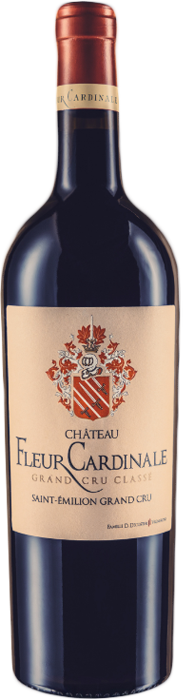
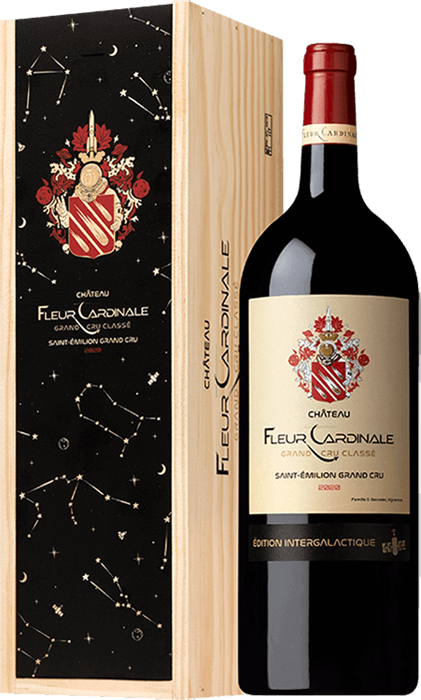
The Castleproduces three wines of remarkable quality.Château Fleur Cardinaleis theGrand Vin of the estateThis is aSaint-Emilion Grand Cru ClasséWith great aging potential, it offers aromas of ripe fruit as well as floral and spicy notes, depending on the vintage. On the palate, this wine is distinguished by its balance and elegant, silky tannins.Château la Croix Cardinaleis derived from a separate property ofChâteau Fleur Cardinaleand is the cousin of the latter. This vintage has a delightful freshness and luscious aromas. Finally, theChâteau Fleur Cardinalealso offers aSecond Winedepending on the vintage,Cardinal Wood, which is characterized by aromas of fresh fruit and notes of undergrowth. It reveals its full potential after two or three years in the cellar.