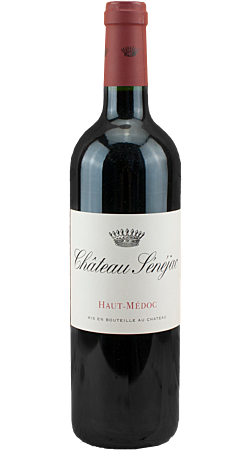
The history of Château Sénéjac
Nearly 5 centuries of history
Nicolas de Bloyswas the first owner of this prestigious castle. The estate's first vines were planted in the 16th century. The castle was later bought back by17th centuryby Joseph-Ignace de Chatard. It was later sold to his nephew, Jean-Louis Baour, who would become the mayor of Pian-Médoc. New buildings were then constructed.
Several owners succeeded one another at the castle until 1860, the year the property was acquired by theCount of GuignéThe family remained there for 139 years. In 1999, the castle was sold toLorraine Cordier, also owner ofTalbot CastleThis acquisition will mark a turning point in the history of the château, which will see the quality of its wines rise to the level of the best wines in the region.
Today, and since 2011,Sénéjacis run by the nephews ofLorraine Cordier, Philippine, Marguerite and Gustave, accompanied by their parents, Nancy Bignon-Cordier and Jean-Paul Bignon.
The terroir of Château Sénéjac
In the heartland of the great Médoc wines
In total, there is a total area of150 hectaresof which only 41 hectares of vines are cultivated. The vineyard is located on a clay-gravel ridge in the commune ofPian-Médoc, on a mosaic of terroirs with different plots forming a single unit. The soil is naturally poor in organic matter, which is beneficial for the expression of the greatCabernet-Sauvignon.
Within the vineyard, we find a variety of grapes including54% Cabernet-Sauvignon, 32% Merlot, 10% Cabernet-Francand a touch ofPetit Verdot at 4%The vineyards benefit from a predominantly oceanic climate thanks to its proximity to the Atlantic Ocean.
On average, the vines are 35 years old, with an average planting density of 6,600 vines per hectare. The vineyard is also managed using sustainable farming practices and is certified.High Environmental Value (HVE).
Winemaking at Château Sénéjac
The environment as a performance factor
AtChâteau Sénéjac,Eric Boissenotis the consulting oenologist. Starting in September, the harvest takes place, then the grapes are destemmed and carefully sorted. Vinification is then carried out by plot and by grape variety according to a traditional method, in temperature-controlled stainless steel tanks.
Next, a gentle extraction is carried out over a period of 20 to 30 days, depending on the vintage. Finally, malolactic fermentation takes place in the following days. This process enhances the suppleness of the wines.
Once the blending is complete at the beginning of winter, the wine will be aged in French oak barrels, 30% of which will be new. In total, the aging process lasts 12 to 14 months.
The wines ofChâteau SénéjacThey are characterized by an almost black color and a very expressive nose of black fruits and spices. On the palate, there is a great deal of breadth and intensity.