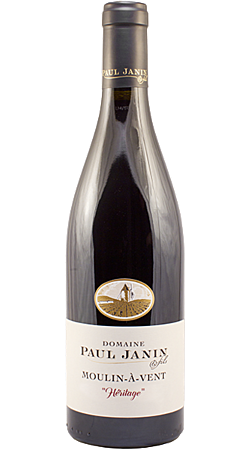
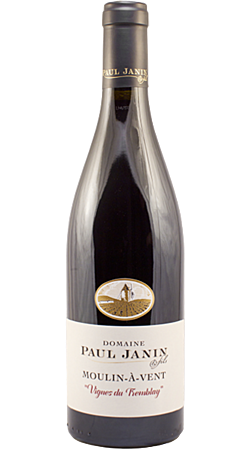
Domaine Paul Janin et Fils
A PASSION FOR DETAIL
The story ofDomaine Paul Janin et filsis afamily historyFor four generations, passionate men have passed down their vineyard fromBeaujolais.
It was in the hamlet of Tremblay that Éric Janin's great-grandfather, a cooper by trade, settled in southern Burgundy. The desire to reconnect with nature and cultivate vines would guide his descendants. While the vineyard had been under cultivation for about fifteen years, a new idea emerged: to no longer sell solely to wine merchants but to produce directly on the estate. The first bottling took place in 1952. In 1967, Paul Janin, who would give his name to the vineyard, expanded the estate. He purchased the hamlet of Les Greneriers, comprised of century-old vines, which quickly became the flagship wine. His son Éric, always curious about his father's passion, joined the management of the estate in 1983 after studying viticulture.2008,Paul officially passes the torch to his son Eric.
The vineyards of Domaine Paul Janin et Fils
THE BEAUJOLAIS TERROIR
It is in Romanèche-Thorins, atnorthern Beaujolaison the appellationWindmillwhere Eric Janin's ancestors settled. His 7.6 hectares of Gamay (100%) for reds and Chardonnay (100%) for whites extend across the only Beaujolais cru that doesn't bear the name of its village. The two flagship grape varieties flourish ongranitic and poor soilstypical of the region. The estate also cultivates vineyards in Chénas and Brouilly, where the grapes are sold to négociants. While this type of soil was initially used for making earthenware, theJanin familymanaged to bring out some of themexceptional winesThe red grapes are grown on 7 hectares, while the white grapes cover 0.6 hectares. Maintenance is meticulously carried out and viticulture isbiological.
Wines from Domaine Paul Janin et Fils
METICULOUS WORK TO ENHANCE THE REGION
Coming from ameticulous mass selectionThe vines are cultivated using rigorous viticultural practices. The harvest is done by hand. Like his parents before him,Eric Janinmakes a point of honor toharvesting his vines in the last few weeksIndeed, it is at this point that the grapes reach their peak ripeness. This makes all the difference during winemaking, as it is at this stage that the wine's consistency is defined. After a gentle extraction, lasting a maximum of seven days, the wines are placed in the aging cellar. This aging process takes place inparcelThe wines are aged for 10 months on their lees in large, traditional oak casks. This technique allows for micro-oxygenation. At the end of this period, the wines are blended. Eric Janin is always delighted to offer his wines for tasting.