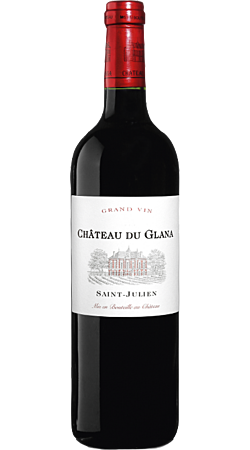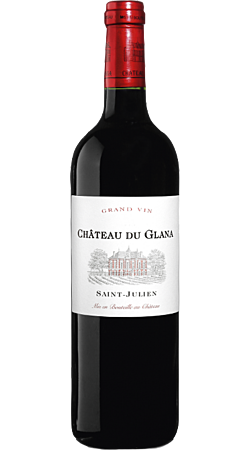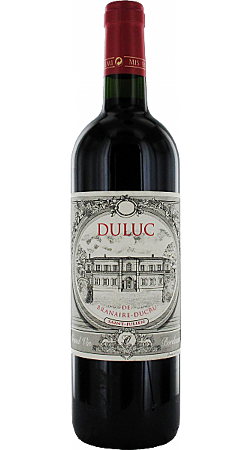
-

Château Léoville Las Cases 2022
Bordeaux • Saint-Julien • 2nd Classified Growth • Red
Regular price 328,80€ tax includedSale price 328,80€ tax included Regular priceUnit price 328,80€ / unit -

97 V Château Léoville Poyferré 2023
Bordeaux • Saint-Julien • 2nd Classified Growth • Red
Regular price 241,56€ tax includedSale price 241,56€ tax included Regular priceUnit price 80,52€ / unit
Discover other similar names
The Saint-Julien appellation lies in the heart of the Médoc , between Pauillac and Margaux. The 910-hectare vineyard rests on a subsoil of gravel, marl, and pebbles. The gently rolling terrain allows rainwater to drain well, contributing to the quality of the vines. It's no wonder, then, that Saint-Julien boasts 11 classified growths! Only red wines are produced in this appellation, distinguished by their power, finesse, and excellent aging potential.
Château Léoville Las Cases
Château Léoville Las Cases was founded in the 17th century. Since the late 19th century, it has belonged to the Delon family. Today, Jean-Hubert Delon manages the estate. Of the 97 hectares of vineyards that comprise the château, 55 are located within a walled enclosure surrounding the château, forming "Le Grand Clos." The subsoil is predominantly gravelly-sandy and gravelly-clay; the clay layer varies in depth depending on the location. The proximity of the Gironde estuary explains this abundance of clay and also creates a microclimate that protects against frost and allows for early ripening.
Château Léoville Las Cases produces two grand wines as well as a second wine, Le Petit Lion du Marquis de Las Cases.
The Grand Vin de Léoville from the Marquis de Las Cases is the Château's first great wine, classified as a Second Growth in 1855. It is made from a blend of Cabernet Sauvignon, Merlot, and Cabernet Franc grapes grown in the Grand Clos vineyard . It is a highly aromatic and concentrated wine, fruity with excellent aging potential. It will reach its peak after 10 to 12 years in the cellar, but can age for 30 to 40 years.
Clos du Marquis is produced from the same grape varieties as its sibling, but not in the same location. The vines are planted on plots between the Barton and Poyferré estates. It is the Château's second grand vin, created in 1902. Its name refers to the Petit Clos, near the Château, which was at the time the residence of the Marquis de Las Cases. It is a structured, complex, and harmonious wine with excellent aging potential. Clos du Marquis also has a second wine, La Petite Marquise du Clos du Marquis .
The second wine is called Le Petit Lion du Marquis de Las Cases . It has existed since 2007 and is made from younger vines planted in the Grand Clos after some plots were uprooted. Despite a higher proportion of Merlot, it shares the flavors of fresh and ripe fruit with its older siblings. However, it is more approachable and can be enjoyed earlier.
Château Léoville Poyferré
Château Léoville-Poyferré shares common roots with Château Léoville-Las Cases. Originally a single estate, they were separated in the 19th century. Château Léoville-Poyferré was designated a Second Growth (2nd Grand Cru Classé) in 1855. In 1920, the Cuvelier family acquired it from its previous owners and continues to manage it today. The vineyard now covers 80 hectares.
The Château produces 3 wines: Château Léoville Poyferré, Pavillon de Léoville Poyferré and Château Moulin Riche.
The flagship wine is called Château Léoville Poyferré . It is a blend of Cabernet Sauvignon, Merlot, Cabernet Franc, and Petit Verdot. It is an elegant wine with notes of red fruit and spice, which can be aged for 15 to 30 years depending on the vintage.
Le Pavillon de Léoville Poyferré is the second wine of the Château, produced from the younger vines of the estate, in the same grape varieties as its elder.
Château Moulin Riche was acquired by the Cuvelier family at the same time as Château Léoville Poyferré. It was long used as the second wine of Léoville Poyferré, but since 2009 it has once again been recognized as a separate estate. It is a fruity and luscious wine, made from Cabernet Sauvignon, Merlot, and Petit Verdot. It is a Cru Bourgeois Supérieur of Saint-Julien.
Château Ducru-Beaucaillou
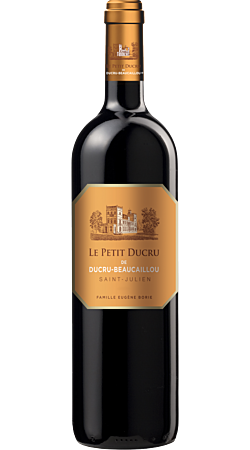
Château Ducru-Beaucaillou takes its name from the "beautiful, large pebbles" that litter its terroir and contribute to the quality of the grapes: they release the heat absorbed during the day in the evening. This château has belonged to the Borie family since 1941, who also own Châteaux Lalande-Borie, Fourcas-Borie, and Ducluzeau. It is a 245-hectare estate, 100 hectares of which are planted with vines on Quaternary gravel soils. The proximity of the Gironde estuary, with its tides, helps regulate temperatures. The vineyard thus experiences milder winters and cooler summers, which helps prevent frost and hail. The grape varieties cultivated here are primarily Cabernet Sauvignon and Merlot . The estate operates according to four main principles: plot management, sustainable farming practices, controlled yields, and meticulous care of the vines to ensure their longevity.
Château Ducru-Beaucaillou produces two red wines.
The first is the grand vin, Château Ducru-Beaucaillou, a Second Growth classified in 1855. It is made from Cabernet Sauvignon and Merlot, and represents 75 hectares of the estate. The vines are on average 35 years old. The wine is aged for 18 months in 225L French oak barrels. We recommend waiting at least 5 years before drinking it, but no more than 15 years. This wine pairs very well with truffles, veal, or fine poultry.
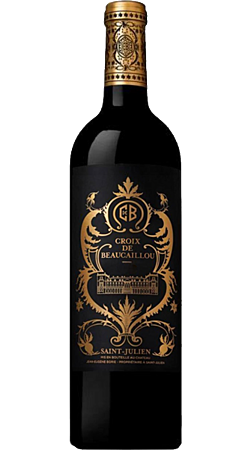
The other wine is called Croix de Beaucaillou . It comes from vines less than ten years old, cultivated on 25 hectares of dedicated plots, and from vats not used for the grand vin. It is a wine made primarily from Cabernet Sauvignon and Merlot, sometimes with a very small proportion of Petit Verdot. It is aged for 12 months in oak barrels. This powerful wine expresses floral and spicy aromas; it should be enjoyed within 3 to 10 years of its production.