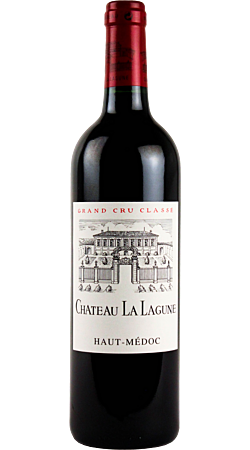
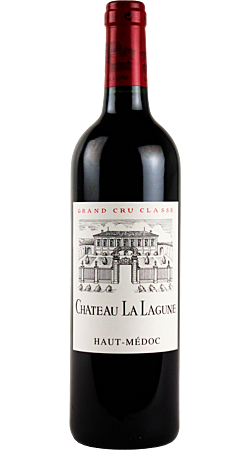
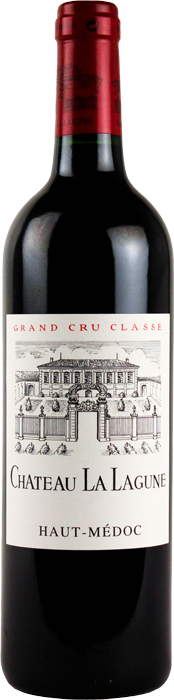
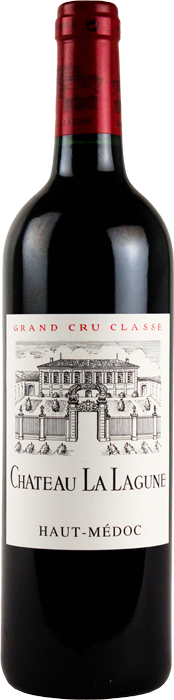
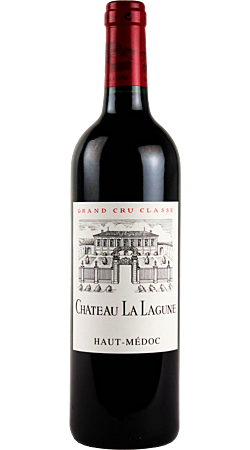
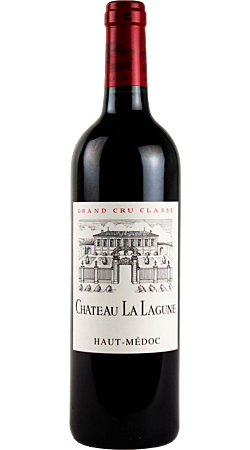
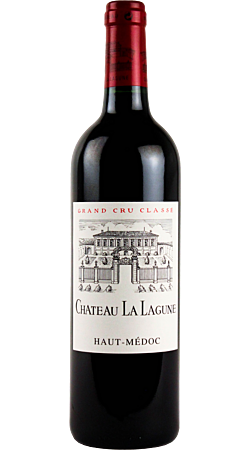
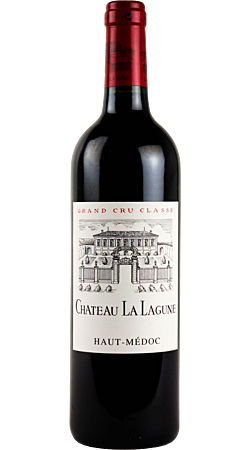
Château La Lagune at its peak since 1855
An excellence unchanged throughout the centuries
The first traces ofChâteau La LaguneDating back to the 18th century, it belonged at the time to the Seguineau family. In 1821, it was acquired by the Périgord landowner, Jouffrey Piston. He then undertook the development of the vineyard, expanding it to 50 hectares. Thanks to the care he took in wine production, the estate acquired the title of3rd Grand Cru since 1855Château La Lagune then passed into the hands of the Sèze family in 1898 but eventually fell into near ruin, weakened by the various wars and economic crises that struck the beginning of the 20th century. Indeed, by 1954 the vineyard comprised only 4 hectares. However, it rose from the ashes in 1958 with its purchase by Georges Brunet, who bought back plots of land, replanted, and modernized the cellars. Just four years later, the estate was sold to René Chayoux, then owner of the Alaya Champagne company, who continued the modernization and expansion of Château La Lagune.
Finally, in 1999,Jean-Jacques FreyAt the head of the powerful real estate company bearing his name, he acquired the Alaya company and thus simultaneously became the owner of Château La Lagune. From 2004 until the present day,his daughter Carolinewill take over the management of the estate, advised by her professor at the Faculty of Oenology in Bordeaux.Denis DebourdieuSince then, the castle has undergone an incredible transformation and its wines have improved in quality, much to the delight of wine lovers.
A typically Bordeaux estate
Château La Lagune in the heart of the Haut-Médoc
THEChâteau La Lagunetoday it comprises 80 hectares planted in a single block, in the south of the appellationHaut-MédocHis privileged position places him asfirst castle on the famous Castle RouteIt boasts ideal soil for producing great wines, typical of the Haut-Médoc yet quite unique. It is composed of Mendelian gravel, very fine and similar to that of Pessac and Léognan. The three grape varieties planted are quite logical: 60% Cabernet Sauvignon, 30% Merlot, and 10% Petit Verdot. This significant proportion of Petit Verdot, a very demanding grape variety, gives Château La Lagune its distinctive character and originality, allowing it to stand out from its illustrious neighbors. The vines, averaging 30 years old, are harvested by hand to ensure a very strict selection of the grapes.
Furthermore, although the vineyard is not certified organic, since the arrival ofCaroline FreyAt the head of the castle, the conversion is gradually made towards techniques oforganic viticultureand evenbiodynamicThis allows the fruit to draw from the soil all the complexity and finesse of the terroir, while preserving the soils, the vines and the winemakers who work there.
The unparalleled expertise of Château La Lagune
A field undergoing rapid change
Since the 2000s, much effort has been made tomodernize the vineyardincluding:
- the raising of the vines,
- a piecemeal approach
- yield control,
- massal selection of grape varieties
- respect for the environment with the “Sustainable Agriculture” certification.
In addition, a new fermentation tank room has been installed. Equipped with 72 temperature-controlled stainless steel tanks, it allows for aplot vinificationvery precise. An optical sorting system was installed in 2010. In parallel with all this, a vast replanting project was undertaken, in order to gradually convert the vineyard to theorganic and biodynamic viticulture.
All of this allows theChâteau La Laguneto position itself among the best and most consistent domains in the sector, thanks in particular to a positioninghigh-endThe wines produced will delight you with their finesse, elegance, harmony, and balance. Moreover, vintage after vintage, they gain in richness and structure, combining power, fresh fruit, and a supple, refined texture. The diverse production of Château La Lagune will satisfy every palate. Indeed, you can choose from theCru Classébut also towards their second wine, Moulin de La Lagune, or even towards their third wine, Mademoiselle L, produced on a 30-hectare vineyard in the village of Cussac. These last two wines are truly enjoyable wines, richer in Merlot and best drunk young.